How to Maintain Ceiling and Wall Speakers for Long-Term Durability?
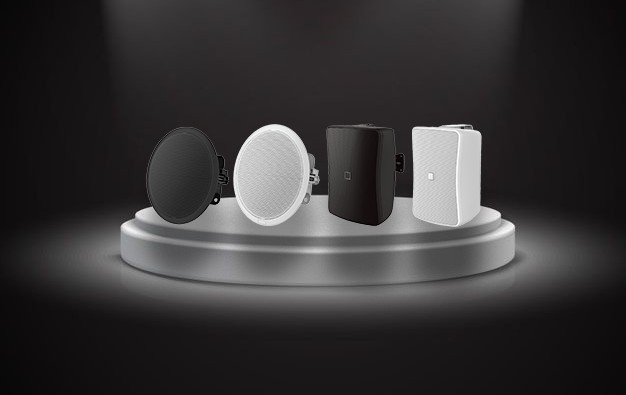
In building, commercial, and industrial projects, audio systems serve as a critical infrastructure for communication and information dissemination. Ceiling and wall speakers act as the core components of these systems, responsible for background music, public announcements, paging (Public Address), and alarm notifications. Given their extensive deployment in office complexes, commercial centers, hotels, hospitals, schools, manufacturing facilities, mosques, auditoriums, and sports complexes, the reliable performance of these units is essential to the operational quality and overall functionality of the facility.
Since these speakers are typically integrated into suspended ceilings or mounted on walls, accessing them post-installation can be challenging. Any malfunction or degradation in audio quality not only escalates maintenance costs but can also disrupt the entire audio system and the facility’s critical communication processes. Consequently, proper maintenance of ceiling and wall speakers is more than just a technical recommendation; it is a strategic approach to extending equipment lifespan, ensuring consistent acoustic performance, and minimizing long-term operational expenditures.
In the following sections, we will examine the key factors affecting the longevity of ceiling and wall speakers, common usage errors, and professional maintenance best practices for high-end projects.
What differentiates ceiling and wall speakers from conventional loudspeakers?
Unlike home audio speakers, which are typically utilized as standalone units, ceiling and wall speakers are integral components of an integrated audio system. These devices are engineered to operate in synergy with amplifiers, mixers, audio sources, central controllers, and complex cabling networks.
In many commercial and industrial projects, 100V Line systems are the industry standard. In these constant-voltage systems, critical factors for ensuring system stability include the precise selection of each speaker’s transformer tap (wattage), accurate calculation of the total system load, appropriate amplifier capacity, and optimized cable routing design. Any error in these calculations can lead to significant audio degradation, reduced efficiency, or permanent equipment damage.
Therefore, maintenance for these units extends far beyond simple cleaning; it necessitates periodic, comprehensive inspections of the entire audio system’s integrity.
“The good news is that most of these issues are preventable by adhering to a few fundamental principles.”
1. Professional Installation: The Foundation of Speaker Longevity
Most premature failures originate from improper installation. If the mounting location is poorly chosen, the wiring is substandard, or the speaker specifications do not align with the environment’s application, even the highest-end equipment will fail to deliver optimal performance.
A professional installation must account for the following technical parameters:
Application Type (e.g., Background music vs. Public Address)
Spatial Area (Square Footage)
Ceiling Height
Required Speaker Count
Total System Power Requirements
Optimized Cable Routing
Correct installation not only enhances acoustic quality but also significantly reduces the physical and electrical stress on the components.
2. Mitigating Dust and Humidity Risks
Over time, dust accumulation on the protective grille and internal components can obstruct sound waves, leading to a loss of acoustic clarity. Furthermore, humidity is a critical factor that can damage internal circuitry, connectors, and the speaker’s voice coil.
To prevent these issues:
Clean the speaker grille every few months.
Use a dry cloth or a slightly damp microfiber cloth.
Never spray water or cleaning agents directly onto the speaker.
For high-humidity environments, ensure the use of moisture-resistant (weatherproof) speakers.
3. Avoid Sustained Operation at Maximum Power
One of the most common user errors is operating the audio system at its maximum output capacity for extended periods. Running speakers at peak volume for hours induces thermal stress on the internal voice coil, significantly increasing the risk of failure. Additionally, this leads to higher Total Harmonic Distortion (THD), which is a primary factor in degrading audio fidelity and reducing equipment lifespan.
It is highly recommended to maintain a balanced volume level for daily use, reserving maximum power only for essential requirements.
4. Selecting the Appropriate Amplifier
Choosing the right amplifier is just as critical as selecting the speakers. If there is a mismatch between the amplifier’s output power or impedance and the speaker’s specifications, it will place undue strain on the system and accelerate component failure. A holistic design approach must evaluate amplifier capacity, speaker count, and cabling specifications as a single, integrated unit.
5. Managing Power Fluctuations
Although speakers are not connected directly to the mains, power surges and fluctuations can damage amplifiers and other source equipment, ultimately compromising the entire audio chain. Investing in standardized power protectors and high-quality power conditioning equipment is significantly more cost-effective than repairing or replacing damaged hardware.
6. Prioritizing Standardized Cabling
Substandard cables or improper connections are the primary culprits behind signal noise, loss of audio fidelity, and intermittent system failures. In professional-grade projects, selecting the correct wire gauge (cross-section) and ensuring precise terminations are vital to the system’s final acoustic performance.
7. Routine Maintenance: A Proactive Approach to Cost Reduction
Major system failures often manifest through subtle symptoms such as crackling sounds, decreased volume, or unusual vibrations. Periodic system audits allow these minor issues to be identified and rectified before they escalate into expensive, large-scale repairs.
For critical facilities such as factories, hospitals, shopping malls, hotels, airports, educational institutions, healthcare centers, and convention halls, routine maintenance is indispensable. In these environments, any disruption in the audio system can critically impact operational workflows or emergency communication protocols.
Warning Signs: When Should Your Audio System Be Inspected?
If you notice any of the following symptoms, it is highly recommended to have your system audited by a qualified professional:
Audio Fidelity Degradation: Typically caused by dust accumulation, improper amplifier settings, or oxidized/worn connections.
Noise or Crackling Sounds: Often a result of substandard cabling, electromagnetic interference (EMI), or power surges.
Intermittent Signal Loss: Can be attributed to loose terminations, faulty wiring, or system overloading.
Unusual Speaker Vibration/Rattling: Usually indicates improper mounting or structural installation issues.
Overheating of Audio Equipment: Generally caused by operating the equipment beyond its rated power capacity (thermal overloading).
Noticeable Drop in Volume Levels: Often stems from component aging or shifts in the system’s overall impedance.
The technical team at Pajoohesh Gostaran Navaye Nik (PGNN) specializes in professional system audits and precise troubleshooting, ensuring these issues are identified and resolved with minimal downtime.
Conclusion
Maintaining ceiling and wall speakers is not an inherently complex task, yet its impact on acoustic performance and equipment longevity is profound. Adhering to professional installation standards, selecting compatible components, mitigating environmental factors like dust and humidity, and implementing routine service schedules are the most effective ways to guarantee years of reliable performance.
If you are planning to design, install, or upgrade a professional audio system, investing in standard-compliant equipment and expert execution is a strategic decision. It significantly minimizes long-term maintenance and repair expenditures. In high-stakes professional environments, the cost of proactive maintenance is always substantially lower than the cost of reactive repairs or complete equipment replacement. Therefore, professional design, standardized installation, and periodic audits should be integrated into your facility’s operational plan from day one.